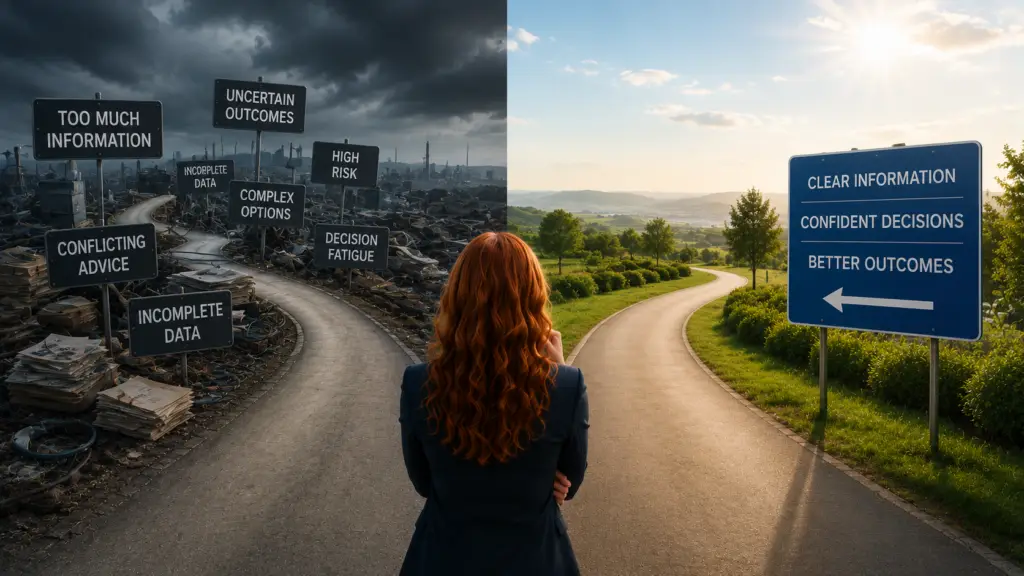
Sustainable growth isn't just about attracting new customers. Customer journey mapping helps small businesses uncover opportunities to reduce friction, strengthen trust, and turn more first-time customers into loyal advocates.
Customers rarely remember every product feature, but they do remember businesses that understand their needs and deliver meaningful experiences. Discover how small businesses can uncover authentic brand stories, strengthen customer trust, and create a competitive advantage through leadership, customer insight, and consistent communication.
In high-stakes buying decisions, buyers evaluate more than your solution. They evaluate your credibility. When sales conversations become overly persuasive, buyers may begin questioning the salesperson instead of the value being offered.
Sales teams often rely on urgency to accelerate buying decisions. While that approach can be effective for simple purchases, it often produces the opposite result in complex buying environments. Buyers who are still evaluating risk, implementation, and business impact rarely need more pressure—they need greater clarity.
Buyer uncertainty is already part of the decision-making process, especially for small business owners managing limited time, resources, and bandwidth. Marketing and sales messaging can either reduce that uncertainty or make it worse. Clear, practical communication helps buyers understand value, evaluate risk, and move forward with greater confidence.
Small teams often operate with limited time, resources, and decision-making capacity. As responsibilities accumulate, decision fatigue can slow buying decisions, increase delays, and affect decision quality. Understanding how decision fatigue influences customer behavior can help organizations create a more effective buying experience.
Customer effort plays a significant role in decision delay. As buying decisions become more complex, stakeholders must complete additional research, coordination, evaluation, and internal communication before moving forward. Understanding how effort influences customer behavior helps explain why decisions often take longer than expected.
Customers do not always choose the best solution. In uncertain markets, stakeholders often prioritize risk reduction over optimization, favoring options that feel safer, more familiar, and easier to defend internally. Understanding how risk influences buying behavior helps explain why lower-risk solutions frequently win, even when better alternatives exist.
Customers rarely move from agreement to action immediately. Before a commitment occurs, stakeholders need confidence in the outcome, support from key decision makers, and clarity around risk and implementation. Understanding decision readiness helps explain why some decisions move forward while others remain under evaluation despite clear value.
Many deals slow because customers are still working through the internal effort required to support a decision. From evaluating risk to building stakeholder support, decision justification shapes how organizations move from recognizing value to approving action.
years of industry experience helping businesses transform
Categories
Jade™
Meet Jade™, our premier AI Assistant designed to empower your marketing strategies with unparalleled insights and automation. Discover how Jade can transform your marketing efforts and drive exceptional growth for your business.