
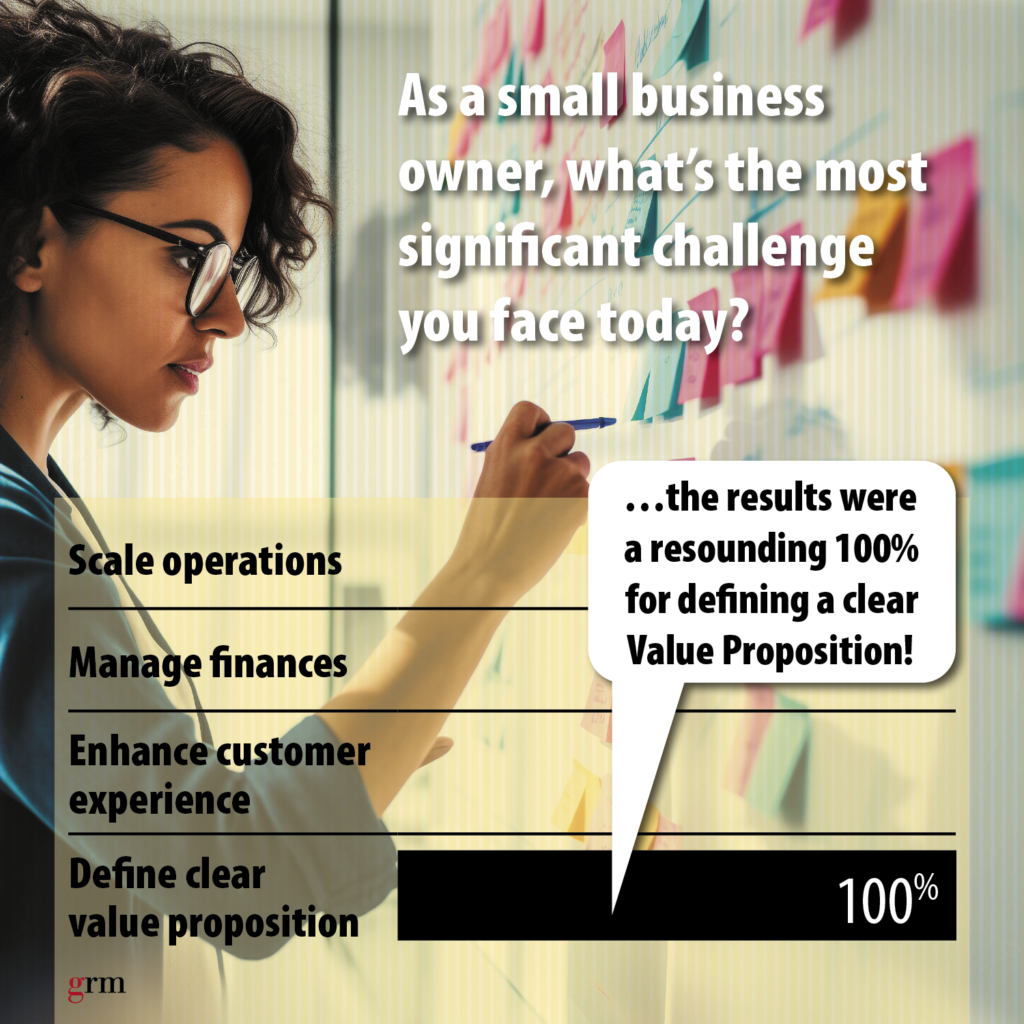
In a recent LinkedIn poll, an overwhelming 100% of small business owners identified “Defining a Clear Value Proposition” as their most significant challenge. Surprisingly, other key challenges like scaling operations, managing finances, and enhancing customer experience lagged behind.
But here’s a key insight: the most effective value propositions are deeply intertwined with customer experience. When done correctly, your value proposition enhances every touchpoint, creating a seamless experience that drives loyalty and growth.
At Breakthrough Marketing Technology, we’ve worked with companies like Teflon® and CertainTeed to define data-driven value propositions that are grounded in what customers actually want and need. In this article, we’ll explore how crafting a fact-based value proposition not only differentiates your business, but also directly improves the customer experience.
What is a Value Proposition?
Your value proposition is more than just a promise. It defines the unique benefits your customers will experience when they choose your product or service over others. However, the most effective value propositions are the ones that align with customer experience at every stage—from awareness to post-purchase loyalty.
In our work with CertainTeed, for example, we found that emotion-driven home improvement projects meant customers wanted a brand that aligned with their personal goals and values. By focusing the value proposition on enhancing both product quality and emotional satisfaction, we were able to elevate the entire customer experience.
How Customer Experience Drives Value Propositions
Defining a value proposition requires understanding your customers deeply. It starts with customer data, including their pain points, needs, and preferences. At Breakthrough, we combine qualitative interviews and quantitative data to identify these key drivers. For example, Teflon® used our Hybrid VOCSM method to uncover customer desires for durability and performance.
When positioning a product, it’s important to match the value proposition to the customer's anticipated experience. For example, we positioned Medela’s high-performance pump by highlighting how it meets time-conscious working mothers’ desire for faster, more private feeding experiences, thus driving customer satisfaction and loyalty.
Once you’ve defined your value proposition, it should continually evolve with customer feedback. Monitoring customer satisfaction ensures that your proposition remains aligned with their needs. This is what we did with Xerox by enhancing their educational tools with feedback from teachers, ultimately leading to improved market positioning.
An effective, clear value proposition does more than set you apart; it enhances the customer experience at every touchpoint, from first awareness to long-term loyalty. By using data-driven insights and focusing on customer needs, small businesses can craft powerful, experience-driven value propositions that foster growth and loyalty.